
Plastic waste can be transformed from discarded products into useful secondary materials through a combination of sorting, shredding, washing, drying, granulation, and extrusion processes.
Materials such as PP, PE, and PET are widely used in packaging, containers, pipes, automotive components, agricultural products, and consumer goods. Instead of sending these materials to landfills or incineration, recycling plants can recover them and convert them into reusable plastic flakes, pellets, and other recycled materials.
The exact process depends on the type and condition of the plastic waste, but efficient size reduction is usually one of the first important steps.
What Happens to Plastic Waste at a Recycling Plant?
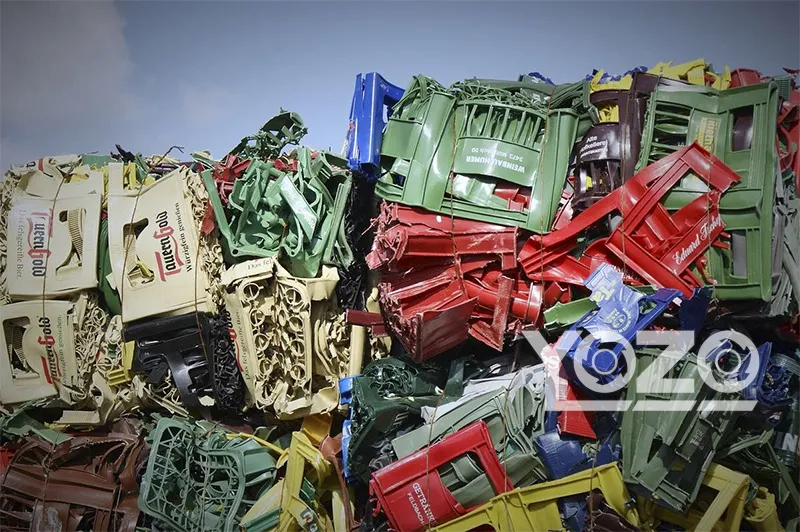
Plastic waste rarely arrives at a recycling facility in a uniform condition. It may include bottles, containers, crates, packaging, films, pipes, drums, and other products.
A typical plastic recycling process may include:
Collection → Sorting → Shredding → Washing → Drying → Granulation → Extrusion → Pelletizing
Not every recycling plant requires every stage. The actual equipment configuration depends on the plastic material, contamination level, and final product.
1. Plastic Waste Is Collected and Sorted
The first step is collecting plastic waste and separating it according to material type and condition.
Common recyclable plastics include:
PP — Polypropylene
PE — Polyethylene
PET — Polyethylene Terephthalate
HDPE — High-Density Polyethylene
LDPE — Low-Density Polyethylene
Sorting can also separate different colors, product types, and contamination levels.
Proper sorting is important because different polymers have different melting temperatures and processing characteristics.
For example, a recycling line designed for PET bottles may be configured differently from one processing mixed PP and PE products.
2. Plastic Waste Is Reduced in Size
After sorting, bulky plastic products often need to be reduced in size.
This is where an industrial plastic shredder becomes important.
Large products such as plastic crates, drums, containers, pipes, pallets, and industrial plastic components may be difficult to feed directly into washing or granulation equipment.
A heavy-duty double shaft shredder can grab and tear these materials into smaller pieces.
A typical primary processing flow is:
Bulky Plastic Waste → Double Shaft Shredder → Smaller Plastic Pieces
Shredding provides several benefits:
Reduces material volume
Improves material handling
Creates a more manageable feedstock
Makes downstream processing easier
Helps improve storage and transportation efficiency
The shredder is generally used for primary size reduction rather than producing the final plastic flakes.
3. Plastic Waste Is Washed
Many post-consumer plastics contain dirt, dust, food residue, labels, oil, soil, or other contaminants.
After size reduction, the material can be sent to a washing system.
Depending on the waste stream, the washing process may include:
Pre-washing
Friction washing
Hot washing
Rinsing
Separation of floating and sinking materials
The purpose is to remove contaminants and improve the quality of the recycled plastic.
Clean industrial production scrap may require much less washing than heavily contaminated post-consumer plastic.
4. Plastic Is Dewatered and Dried
After washing, the plastic contains moisture that needs to be removed before further processing.
Mechanical dewatering can remove a significant portion of the water, followed by thermal or air drying where required.
Proper moisture control is particularly important before extrusion because excessive moisture can negatively affect the processing of certain recycled plastics.
The required drying method depends on the material and final product specifications.
5. Plastic Is Granulated into Smaller Flakes
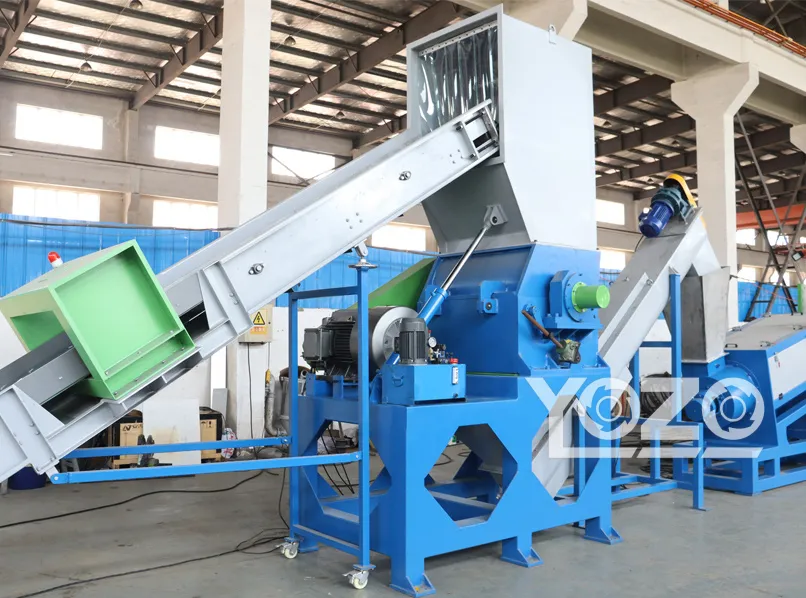
After primary shredding and washing, plastic pieces may be processed through a plastic granulator.
A granulator uses high-speed cutting to produce smaller and more uniform plastic flakes.
This stage is different from primary shredding.
The shredder focuses on handling bulky and irregular waste, while the granulator is generally used to produce more consistent particle sizes.
A typical process can therefore be:
Large Plastic Products → Shredder → Granulator → Plastic Flakes
The required flake size depends on the subsequent processing equipment and final product.
6. Plastic Flakes Are Sorted and Screened
After granulation, additional separation may be required.
Depending on the recycling line, equipment can be used to remove:
Metal
Labels
Dust
Fine particles
Different polymer types
Other unwanted materials
Air separation, magnetic separation, screening, and other technologies can be incorporated into the system.
The objective is to produce a cleaner and more consistent recycled plastic feedstock.
7. Plastic Flakes Can Be Extruded into Pellets
Clean and properly prepared plastic flakes can be fed into an extruder.
During extrusion, the plastic is heated and melted before being filtered and formed into strands.
The strands are then cooled and cut into pellets.
The general process is:
Plastic Flakes → Extruder → Melt Filtration → Cooling → Pelletizing → Recycled Plastic Pellets
These pellets can be used as secondary raw materials in suitable manufacturing applications.
The quality of the recycled pellets depends on factors such as polymer purity, contamination, moisture, thermal history, and the requirements of the final application.
What Reusable Materials Can Be Produced from Plastic Waste?
Recycled plastic can be converted into several useful forms.
Recycled Plastic Flakes
Plastic flakes are commonly produced after shredding, washing, drying, and granulation.
They can be sold as recycled feedstock or used directly in some manufacturing processes.
Recycled Plastic Pellets
Pellets provide a more standardized form of recycled plastic and can be used as feedstock for injection molding, extrusion, and other manufacturing processes, depending on quality.
Recycled Plastic Products
Recycled PP, PE, and other plastics can potentially be used to manufacture products such as:
Plastic pallets
Containers
Pipes
Outdoor products
Construction products
Automotive components
Household products
Packaging products where applicable
The suitability of recycled plastic depends on the material quality and product requirements.
Why Is Shredding Important in Plastic Recycling?
Shredding is a critical step because incoming plastic waste can vary greatly in size and shape.
For example, a recycling plant may receive a mixture of:
Large plastic crates
PE drums
Plastic pipes
Containers
Industrial plastic scrap
Bulky plastic products
A primary shredder converts these irregular materials into a more manageable feedstock.
This helps downstream equipment operate more consistently and makes automated material handling easier.
Why Use a Double Shaft Shredder?
A double shaft shredder is commonly used for primary processing of bulky plastic waste because it combines high torque with strong grabbing and tearing action.
Two counter-rotating shafts pull the material into the cutting chamber and reduce its size.
Potential advantages include:
High torque
Strong tearing capability
Suitable for bulky plastic
Continuous material feeding
Reduced need for manual pre-cutting
Easy integration with conveyors and downstream equipment
It is particularly useful for rigid PP and PE products such as crates, drums, containers, pipes, and other large plastic waste.
However, not every plastic stream requires a double shaft shredder. Clean PET bottles, thin plastic films, and relatively uniform production scrap may require different size-reduction equipment.
How Does the Process Differ for PP, PE, and PET?
Different plastics require different recycling processes.
PP Recycling
PP products such as crates, containers, automotive components, and household products can be shredded, washed, granulated, and processed into recycled PP flakes or pellets.
PE Recycling
Rigid PE products such as drums, containers, and pipes can undergo primary shredding followed by washing and granulation.
PE film requires additional consideration because flexible film can be more difficult to feed and process than rigid plastic.
PET Recycling
PET bottle recycling commonly involves sorting, size reduction, washing, drying, and flake production.
If high-quality recycled PET is required, additional sorting and purification stages may be incorporated.
Therefore, the recycling line should always be designed around the specific plastic waste stream.
What Equipment Is Needed for a Plastic Recycling Line?
A complete plastic recycling system may include:
Feeding conveyor
Sorting system
Primary plastic shredder
Washing equipment
Dewatering system
Dryer
Plastic granulator
Screening equipment
Extruder
Pelletizing system
Final product collection
A smaller recycling operation may require only some of these machines.
The final equipment configuration depends on whether the plant produces shredded plastic, washed flakes, recycled granules, or finished pellets.
How to Improve the Efficiency of Plastic Recycling?
Several factors can improve the performance of a plastic recycling plant.
Maintain Good Material Sorting
Keeping different polymers separated can improve the consistency and quality of the recycled material.
Match the Shredder to the Feedstock
The shredder should be selected according to material type, size, capacity, and desired output.
Control Contamination
Removing dirt, metals, labels, and other unwanted materials can improve downstream processing.
Match Equipment Capacities
The shredder, washing system, granulator, and extruder should be properly matched to avoid bottlenecks.
Design for Continuous Material Flow
Well-designed conveyors and feeding systems can reduce manual handling and improve production stability.
Why Choose YOZO Machinery?
YOZO Machinery provides industrial shredding solutions for plastic recycling applications.
A YOZO double shaft shredder can be used as the primary size-reduction machine for bulky plastic waste such as PP crates, PE containers, plastic drums, pipes, pallets, and other rigid plastic products.
The shredder can be integrated with conveyors, sorting systems, washing equipment, granulators, and other downstream machinery.
YOZO Machinery can help customers evaluate the appropriate primary shredding configuration based on:
Plastic type
Feedstock dimensions
Required capacity
Target output size
Downstream recycling process
For flexible plastic films or specialized PET recycling applications, additional equipment may be required to achieve the desired final product.
Conclusion
Plastic waste can be transformed into reusable materials through a series of carefully designed recycling processes.
Sorting identifies suitable materials, shredding reduces bulky waste, washing removes contamination, granulation produces consistent flakes, and extrusion can convert prepared plastic into recycled pellets.
A heavy-duty industrial plastic shredder is particularly important at the beginning of many recycling lines because it creates a manageable feedstock for downstream equipment.
For bulky PP and PE waste, a double shaft shredder can provide high-torque primary size reduction and reliable material handling.
With the right combination of shredding, washing, separation, granulation, and extrusion equipment, plastic recycling plants can turn discarded materials into valuable secondary raw materials and support a more efficient circular economy.