
Choosing the right plastic shredder size is an important decision for any plastic recycling business. A machine that is too small may not provide enough capacity for the required workload, while an oversized shredder can increase equipment costs and operating expenses without providing a practical benefit.
The right choice depends on several factors, including the type of plastic waste, feedstock size, required processing capacity, desired output size, and downstream recycling equipment.
For many recycling businesses, a heavy-duty double shaft shredder can be used as a primary size-reduction machine for bulky and difficult plastic waste. However, the appropriate machine configuration should always be determined by the actual material and production requirements.
What Does Plastic Shredder Size Mean?
When selecting an industrial plastic shredder, "size" does not refer only to the physical dimensions of the machine.
Several specifications are important:
Processing capacity
Shredding chamber dimensions
Shaft configuration
Motor and drive system
Cutting tool size
Feed opening
Desired output size
Among these factors, processing capacity is usually one of the most important considerations for a recycling business.
Capacity is generally expressed in tons per hour or kilograms per hour, but actual output depends on the material, feeding method, moisture, contamination, and target particle size.
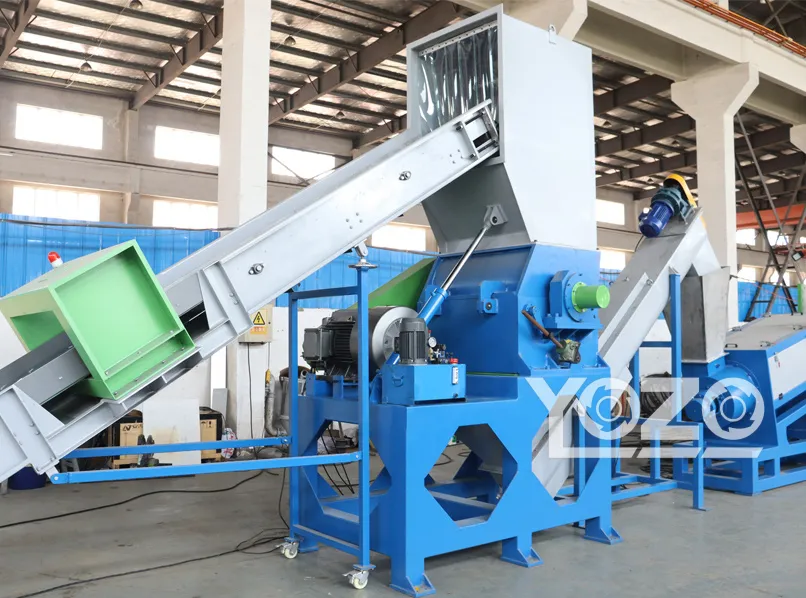
How Much Plastic Waste Do You Need to Process?
The first step is to estimate your actual processing requirement.
For example, a recycling business may need to process:
A few tons of plastic per day
Several tons per hour
Continuous high-volume industrial plastic waste
Seasonal or irregular plastic waste streams
It is important to distinguish between the amount of plastic received and the amount the shredder must process per hour.
If a facility receives 80 tons of plastic per week but operates the shredder only 40 hours per week, the required average processing rate is approximately 2 tons per hour.
However, it is generally better to consider peak workload rather than simply dividing the annual or weekly volume.
Small, Medium, or Large Plastic Shredder?
Plastic shredders can generally be considered according to their intended application and required throughput.
Small-Scale Plastic Recycling
Smaller recycling operations may process limited quantities of relatively consistent plastic waste.
Typical applications can include:
Production scrap
Small batches of plastic containers
Manufacturing waste
Clean plastic products
A smaller machine may be sufficient when the feedstock is consistent and the required capacity is relatively low.
The main advantage is avoiding unnecessary investment in a machine that is much larger than the actual production requirement.
Medium-Scale Recycling
Medium-sized recycling businesses often process several types of plastic waste and require more continuous operation.
Typical materials may include:
PP crates
PE containers
Plastic drums
Industrial plastic scrap
Packaging waste
Plastic products
A medium-capacity industrial shredder can provide a balance between processing capacity, investment, and operating requirements.
Large-Scale Plastic Recycling
Large recycling plants may process substantial quantities of plastic every day.
These facilities generally require:
High processing capacity
Automated feeding
Continuous material handling
Large feed openings
Heavy-duty cutting systems
Conveyor integration
Downstream washing or granulation
For high-volume applications, a larger industrial shredder or multiple shredding units may be appropriate.
What Type of Plastic Are You Processing?
The material itself can be more important than the nominal machine size.
PP Waste
Rigid PP products such as crates, containers, pallets, and automotive components can require substantial shredding force.
A high-torque industrial shredder can be suitable for bulky PP waste before granulation or further processing.
PE Waste
PE waste can include both rigid products and flexible films.
Rigid PE drums, containers, and pipes can often be processed using heavy-duty primary shredding equipment.
PE film requires more careful consideration because flexible material can behave differently inside the shredding chamber.
PET Waste
PET bottles and containers are often processed through sorting, size reduction, washing, drying, and flake production.
A recycling line producing relatively uniform PET flakes may use a granulator or specialized bottle-processing equipment rather than relying only on a primary shredder.
Therefore, the "right size" machine depends not only on capacity but also on the physical characteristics of the feedstock.
How Does Feed Size Affect Shredder Selection?
The size of the incoming material determines how large the feed opening and shredding chamber need to be.
For example, processing:
Plastic bottles
Small containers
Plastic film
is very different from processing:
Large plastic crates
Plastic drums
Plastic pipes
Plastic pallets
Large industrial components
A machine may have sufficient motor power but still be unsuitable if the feed opening cannot accommodate the material efficiently.
For bulky plastic waste, the complete feeding system should therefore be considered together with the shredder.
What Output Size Do You Need?
Another important factor is the desired output size.
A primary shredder is normally designed to reduce large plastic products into manageable pieces rather than produce final-quality plastic flakes.
For example:
Bulky Plastic Waste → Primary Shredder → Granulator → Plastic Flakes
If the recycling process requires very small and uniform particles, a second size-reduction stage may be necessary.
The output size should therefore be determined based on the next step in the recycling process.
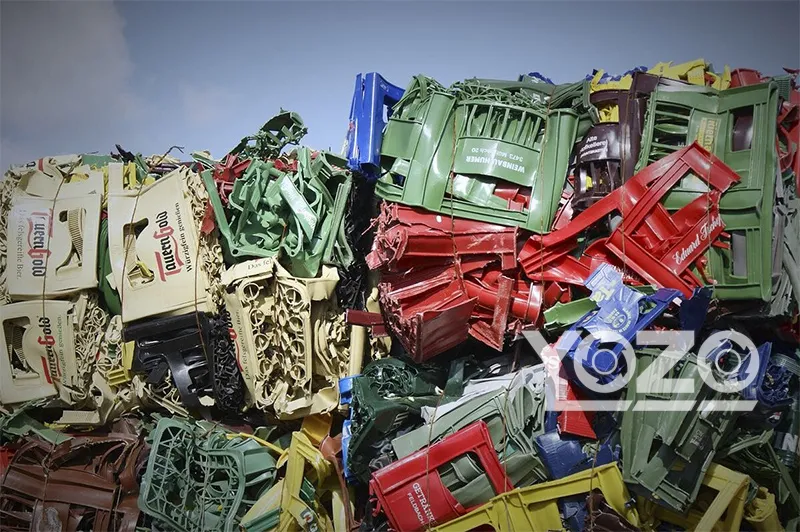
Why Is a Double Shaft Shredder Suitable for Bulky Plastic?
A double shaft shredder is often used as a primary shredder for bulky plastic waste.
It uses two counter-rotating shafts fitted with cutting tools. The shafts grab the material and pull it into the shredding chamber, where it is torn and sheared.
This design can provide:
High torque
Strong material grabbing
Good handling of bulky plastic
Continuous feeding
Reduced need for manual pre-cutting
Easy integration with conveyors
For recycling businesses processing large PP crates, PE drums, plastic pipes, containers, and other rigid plastic waste, a double shaft shredder can be a practical primary processing solution.
However, flexible films and clean PET bottles may require different or additional equipment.
Should You Buy a Larger Shredder Than You Need?
Not necessarily.
It may seem attractive to purchase a larger machine to allow for future growth, but oversizing can increase:
Initial investment
Power consumption
Maintenance requirements
Spare parts costs
Overall system size
At the same time, choosing a machine with too little capacity can create production bottlenecks.
A better approach is to consider both the current processing requirement and realistic future expansion.
If production is expected to increase significantly, the recycling line can be designed with expansion in mind rather than automatically purchasing the largest available shredder.
How to Calculate the Required Shredder Capacity?
A simple starting point is:
Required Capacity = Required Daily Throughput ÷ Effective Operating Hours
For example, if a plant needs to process 40 tons of plastic per day and operates the shredding system for 10 effective hours, the average required throughput is:
40 ÷ 10 = 4 tons per hour
The actual machine should not necessarily be selected at exactly 4 tons per hour.
Feeding interruptions, material variations, maintenance, and peak workloads should also be considered when determining the practical equipment capacity.
Actual shredder output can vary considerably depending on the plastic material and operating conditions.
What Other Equipment Should Be Considered?
A plastic shredder rarely works alone in a complete recycling plant.
Depending on the application, the system may include:
Feeding conveyor
Primary plastic shredder
Sorting equipment
Magnetic or metal separation
Washing system
Dewatering equipment
Dryer
Secondary shredder or granulator
Screening system
Extruder and pelletizing equipment
The shredder should therefore be selected according to the capacity of the entire recycling line.
A high-capacity shredder connected to a low-capacity granulator, for example, can simply move the bottleneck to the next stage.
What Information Should You Give a Shredder Manufacturer?
Before requesting a quotation, prepare as much information as possible.
A professional equipment supplier will typically need to know:
Material
PP, PE, PET, mixed plastic, or another material.
Feedstock Size
The approximate dimensions and weight of the largest plastic items.
Processing Capacity
The required tons per hour or tons per day.
Output Size
The approximate size required after primary shredding.
Operating Schedule
For example, hours per day and days per week.
Downstream Process
Whether the material will go to washing, granulation, extrusion, fuel preparation, or another process.
Providing this information allows the supplier to recommend a machine based on the actual application rather than simply selecting a shredder by motor power.
Why Choose YOZO Machinery?
YOZO Machinery provides industrial shredding solutions for plastic recycling applications.
A YOZO double shaft shredder can be used as a primary size-reduction machine for bulky plastic waste such as PP crates, PE containers, plastic drums, pipes, pallets, and other rigid plastic products.
YOZO Machinery can evaluate the appropriate machine configuration based on:
Plastic type
Feedstock dimensions
Required capacity
Desired output size
Operating hours
Downstream equipment
For complete recycling projects, the shredder can be integrated with conveyors, sorting systems, washing equipment, granulators, and other processing machinery.
The goal is to select a practical machine size that matches the complete production line rather than simply choosing the largest available model.
Conclusion
The right plastic shredder size depends on much more than the amount of plastic waste you receive.
The material type, feedstock dimensions, required capacity, output size, operating schedule, and downstream processing requirements should all be considered before selecting equipment.
For bulky PP and PE waste, a high-torque double shaft shredder can provide an effective primary size-reduction solution. PET bottles, plastic films, and other specialized materials may require different or additional processing equipment.
By matching shredder capacity to the actual recycling process, businesses can avoid unnecessary investment while maintaining reliable production.
YOZO Machinery can provide industrial shredding solutions for plastic recycling projects and help customers select a suitable primary shredding configuration based on their specific material and production requirements.