
Textile waste from garment factories, clothing collection centers, and furniture manufacturers can be difficult to handle due to its bulky size, flexible structure, and mixed fiber composition. A textile waste shredder helps reduce these materials into smaller pieces, making them easier to transport, sort, and prepare for recycling.
In this article, we explain how textile shredding improves fabric recycling and how to choose suitable equipment for your recycling operation.
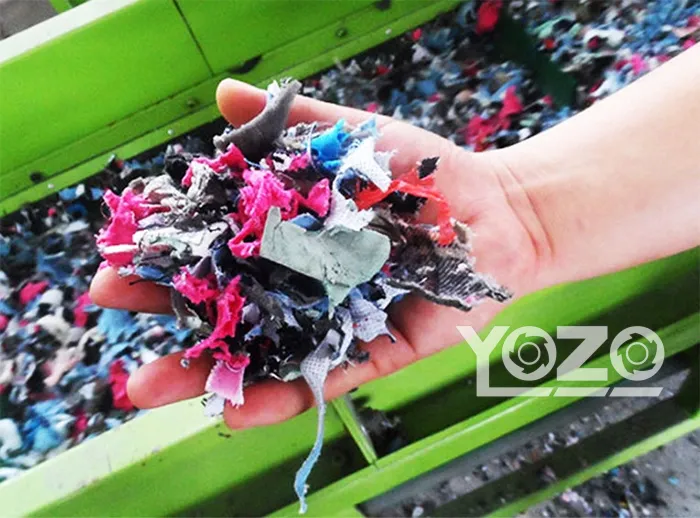
What Is a Textile Waste Shredder?
A textile waste shredder is an industrial machine designed to reduce fabric waste and discarded textile products into smaller pieces. Common applications include:
Garment factory scraps and fabric offcuts
Used clothing and rejected garments
Cotton, polyester, and blended fabrics
Upholstery textiles, carpets, and selected nonwoven materials
For bulky or mixed textile waste, a double shaft shredder can provide effective primary size reduction. Its counter-rotating shafts and cutting tools help grip and tear suitable materials into smaller pieces.
How Does Shredding Improve Fabric Recycling?
1. Reduces Waste Volume
Bulky clothing, fabric rolls, and upholstery materials take up valuable storage and transportation space. Shredding reduces their physical size, making collection, storage, and material transfer easier.
2. Improves Material Handling
Long fabric strips and tangled garments can cause feeding problems in downstream equipment. Shredding creates more manageable material that can be transferred to conveyors, sorting systems, and other processing machinery.
3. Supports Sorting and Separation
Textile recycling often requires separating materials by fiber type, color, or composition. Shredding prepares the waste for subsequent sorting, although additional equipment or manual inspection may still be necessary.
4. Prepares Textiles for Further Recycling
Shredded textiles can be sent for fiber recovery, material reuse, or other suitable recycling processes. The required output size depends on the downstream application. Shredding alone does not convert textile waste directly into reusable yarn or finished fabric.
How Does a Textile Waste Shredder Work?
A typical textile recycling process includes the following steps:
Collection and inspection: Collect textile waste and remove unsuitable contaminants, such as large metal components.
Feeding: Load materials into the shredder manually or through a conveyor system.
Primary shredding: Reduce bulky garments, fabric scraps, and suitable textile products into smaller pieces.
Further processing: Use screening, secondary shredding, or fiber-opening equipment when required.
Material recovery: Send the prepared textiles to the appropriate recycling or reuse process.
The exact process depends on the fiber composition, contamination level, and final application.
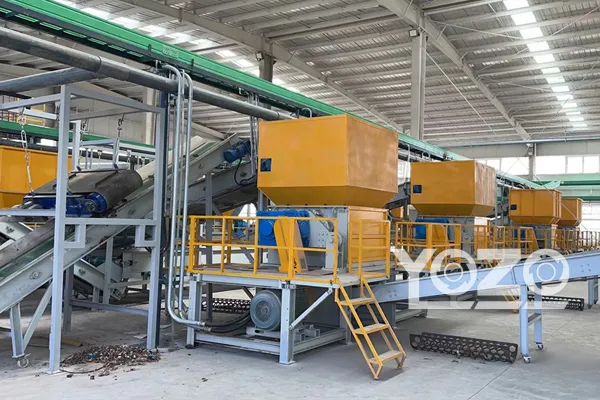
Why Use a Double Shaft Shredder for Textile Waste?
A double shaft shredder can be a practical option for facilities processing bulky clothing, fabric bundles, and selected upholstery waste.
Strong material-grabbing action: Counter-rotating shafts help pull suitable materials into the cutting chamber.
Handles bulky waste: Reduces large textile products into more manageable pieces.
Flexible applications: Can process various suitable textile waste streams with the right configuration.
Recycling line integration: Can work with conveyors, sorting equipment, and downstream processing machinery.
However, long fibers and elastic fabrics may wrap around rotating components. Cutting-tool design, feeding conditions, and machine configuration should therefore be evaluated against the actual material.
How to Choose the Right Textile Shredder
Before purchasing a textile waste shredder, consider these key factors:
Material type: Cotton scraps, synthetic fabrics, mixed clothing, and carpets may require different configurations.
Processing capacity: Match the machine to your required throughput and feeding conditions.
Output size: Determine the size needed for subsequent sorting or recycling.
Maintenance: Evaluate blade durability, cleaning access, and ease of replacement.
System integration: Consider whether conveyors, sorting systems, or fiber-opening equipment are also needed.
Testing representative textile materials before finalizing the equipment configuration can help confirm suitability.
Why Choose YOZO Machinery?
YOZO Machinery provides industrial shredding solutions for waste size reduction and recycling applications. When planning a textile waste recycling line, equipment selection should be based on material characteristics, processing capacity, output requirements, and downstream recycling needs.
Explore industrial shredding solutions at YOZO Machinery.
Conclusion
A textile waste shredder improves fabric recycling by reducing bulky materials, simplifying handling, and preparing textiles for further processing. For suitable bulky and mixed textile waste, a double shaft shredder can serve as an effective primary size-reduction machine.
Choosing equipment that matches the material and recycling process helps businesses develop a more efficient and practical textile waste management system.