
As the amount of municipal solid waste (MSW) continues to increase worldwide, traditional landfill disposal is becoming less sustainable. Limited landfill space, rising disposal costs, and stricter environmental regulations are driving the demand for more efficient waste treatment solutions.
One of the most effective alternatives is an RDF (Refuse Derived Fuel) production line. By converting combustible waste into alternative fuel, RDF production lines significantly reduce the amount of waste sent to landfills while creating valuable energy resources.
What Is an RDF Production Line?
An RDF production line is a waste recycling system that processes combustible materials from municipal and commercial waste into Refuse Derived Fuel.
Common feed materials include:
Municipal solid waste (MSW)
Plastic waste
Paper and cardboard
Textile waste
Wood waste
Packaging materials
After shredding, sorting, and separating recyclable and non-combustible materials, the remaining combustible fraction is processed into RDF fuel for industrial use.
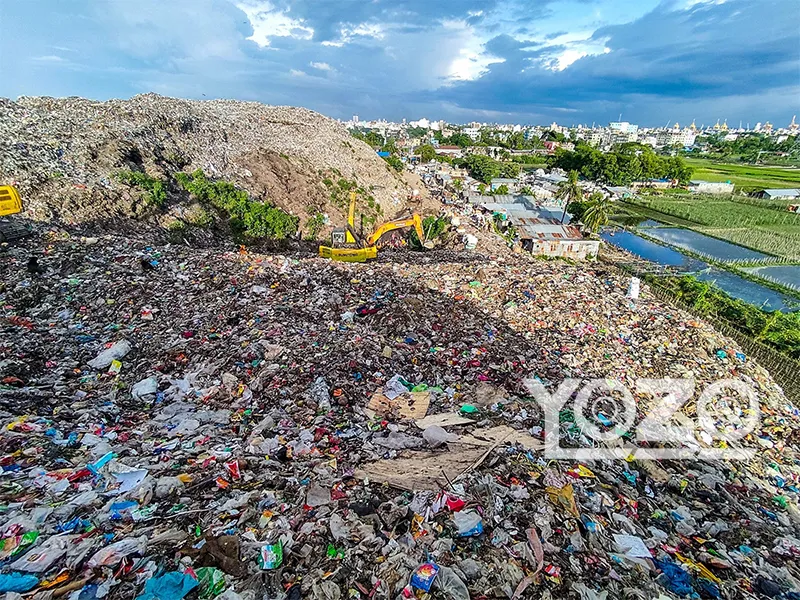
How Do RDF Production Lines Reduce Landfill Waste?
Recover Valuable Combustible Materials
Instead of sending mixed waste directly to landfills, RDF production lines recover combustible materials that can be reused as alternative fuel.
This reduces the volume of waste requiring final disposal.
Improve Recycling Efficiency
The production line separates recyclable materials such as metals and reusable plastics before RDF fuel is produced, increasing the overall recovery rate of valuable resources.
Reduce Waste Volume
Large household and commercial waste materials are shredded into smaller particles, making handling, transportation, and storage much more efficient while reducing landfill space requirements.
Support Waste-to-Energy Projects
The finished RDF fuel can replace part of the fossil fuels used in cement plants, power stations, and industrial boilers, reducing dependence on traditional energy sources.
Key Equipment in an RDF Production Line
A complete RDF production system typically includes:
Feeding conveyor
Double shaft shredder
Magnetic separator
Screening system
Air separator
Secondary shredder
RDF storage system
Among these machines, the double shaft shredder plays a critical role by reducing waste size and preparing materials for efficient separation.
Benefits of RDF Production Lines
Installing an RDF production line can help waste management facilities:
Reduce landfill disposal
Improve resource recovery
Produce alternative fuel
Lower transportation costs
Increase recycling efficiency
Support sustainable waste management
These advantages make RDF production an important part of modern circular economy initiatives.
Why Choose YOZO Machinery?
As a professional manufacturer of waste recycling equipment, YOZO Machinery provides complete RDF production line solutions for municipal waste and commercial waste recycling projects.
YOZO Machinery offers:
Heavy-duty double shaft shredders
Complete RDF production systems
Customized recycling solutions
Wear-resistant blade technology
Stable and efficient operation
Professional technical support
Whether you are building a new RDF fuel facility or upgrading an existing recycling plant, YOZO Machinery can design a solution that meets your production capacity and material requirements.
Conclusion
RDF production lines help reduce landfill waste by recovering combustible materials, improving recycling efficiency, and converting waste into valuable alternative fuel. As more industries adopt waste-to-energy technologies, RDF systems are becoming an essential part of modern waste management.
With reliable equipment such as heavy-duty double shaft shredders and complete RDF processing lines, YOZO Machinery helps recycling facilities improve efficiency while supporting sustainable resource recovery and environmental protection.