
As governments and industries seek sustainable alternatives to landfill disposal, RDF (Refuse Derived Fuel) production has become an increasingly popular waste-to-energy solution. RDF fuel is produced from combustible waste materials such as plastics, paper, textiles, wood, and municipal solid waste (MSW), providing an alternative energy source for cement plants and industrial boilers.
To produce high-quality RDF fuel efficiently, a complete RDF production line requires several types of equipment working together. Each machine plays a specific role in waste size reduction, material separation, and fuel preparation.
What Is an RDF Production Line?
An RDF production line is a waste processing system designed to convert combustible waste into Refuse Derived Fuel. The goal is to remove non-combustible materials while producing a uniform fuel product with high calorific value.
Typical feed materials include:
Municipal solid waste (MSW)
Commercial waste
Plastic waste
Paper and cardboard
Textile waste
Wood waste
Packaging materials
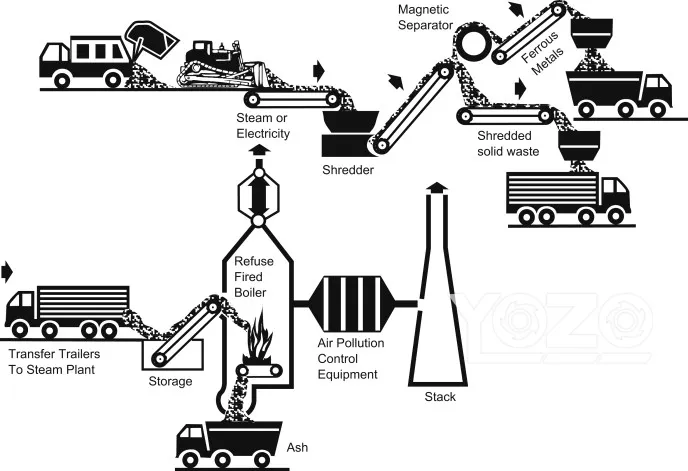
Essential Equipment for an RDF Production Line
1. Feeding Conveyor System
The process begins with a feeding conveyor that transports waste materials into the shredding system. A stable feeding system helps ensure continuous and efficient production.
2. Primary Shredder
The primary shredder is one of the most important machines in the RDF production line. Its main function is to reduce large waste materials into smaller pieces for easier separation and processing.
Double shaft shredders are commonly used because they offer:
High torque output
Strong tearing force
Stable operation with mixed waste
Excellent performance on bulky materials
3. Magnetic Separator
After shredding, ferrous metals such as steel cans and metal scraps are removed using magnetic separation equipment.
Benefits include:
Protecting downstream equipment
Improving RDF fuel quality
Increasing metal recycling value
4. Screening System
Screens separate materials according to size. Oversized materials may be returned for additional shredding, while suitable materials continue through the production process.
5. Air Separator
Air classification systems separate light combustible materials from heavier non-combustible materials such as stones, glass, and inert waste.
This step helps increase the calorific value of the final RDF fuel.
6. Secondary Shredder
Many RDF facilities use a secondary shredder to achieve a more uniform particle size.
Advantages include:
Improved fuel consistency
Better combustion performance
Easier storage and transportation
7. RDF Storage and Discharge System
The finished RDF material is collected, stored, and prepared for transportation to cement plants, power stations, or industrial users.
Typical RDF Production Process
A standard RDF production line generally follows this workflow:
Waste Feeding → Primary Shredding → Magnetic Separation → Screening → Air Separation → Secondary Shredding → RDF Storage
This process removes contaminants while producing a fuel product suitable for energy recovery applications.
Benefits of a Complete RDF Production Line
Installing a complete RDF production system can help facilities:
Reduce landfill waste
Recover valuable recyclable materials
Produce alternative fuel from waste
Improve waste treatment efficiency
Lower disposal costs
Support environmental sustainability goals
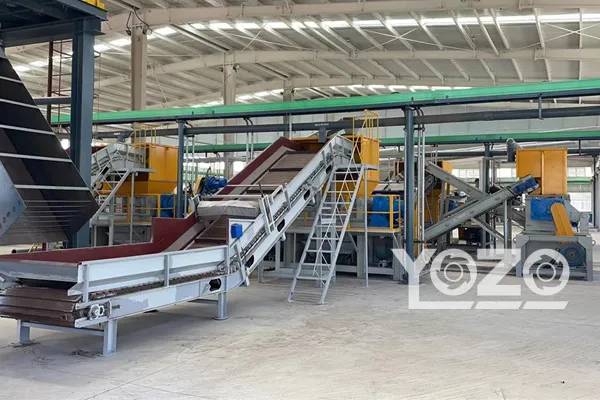
Why Choose YOZO Machinery for RDF Production Solutions?
As a professional waste recycling equipment manufacturer, YOZO Machinery provides complete RDF production line solutions for waste management and recycling projects.
YOZO Machinery offers:
Heavy-duty double shaft shredders
Secondary shredding systems
Magnetic separation equipment
Customized RDF production lines
Wear-resistant blade technology
Professional engineering support
Whether processing municipal solid waste, commercial waste, or industrial combustible waste, YOZO Machinery can provide a customized RDF solution based on your capacity and fuel quality requirements.
Conclusion
A complete RDF production line requires multiple pieces of equipment, including conveyors, shredders, magnetic separators, screening systems, air separators, and storage units. Among them, the shredder serves as the foundation of the entire system by preparing waste for efficient separation and fuel production.
For companies looking to convert waste into valuable energy resources, investing in a well-designed RDF production line is an effective way to improve efficiency, reduce landfill dependence, and support sustainable waste management.