
As cities continue to grow, the volume of household waste generated every day is increasing rapidly. Municipal Solid Waste (MSW) typically contains plastics, paper, cardboard, textiles, food waste, wood, and other mixed materials. Without proper size reduction, these materials are difficult to sort, transport, and recycle efficiently.
A municipal solid waste shredder is one of the most important pieces of equipment in modern waste recycling plants. By reducing waste size and improving material handling, it helps increase recycling efficiency while lowering overall processing costs.
What Is a Municipal Solid Waste Shredder?
A municipal solid waste shredder is an industrial machine designed to shred mixed household garbage into smaller and more uniform pieces.
Common materials include:
Household garbage
Plastic packaging
Paper and cardboard
Textile waste
Wood waste
Organic waste
Mixed commercial waste
After shredding, the materials can be sent to sorting systems, recycling facilities, RDF fuel production lines, or waste-to-energy plants.
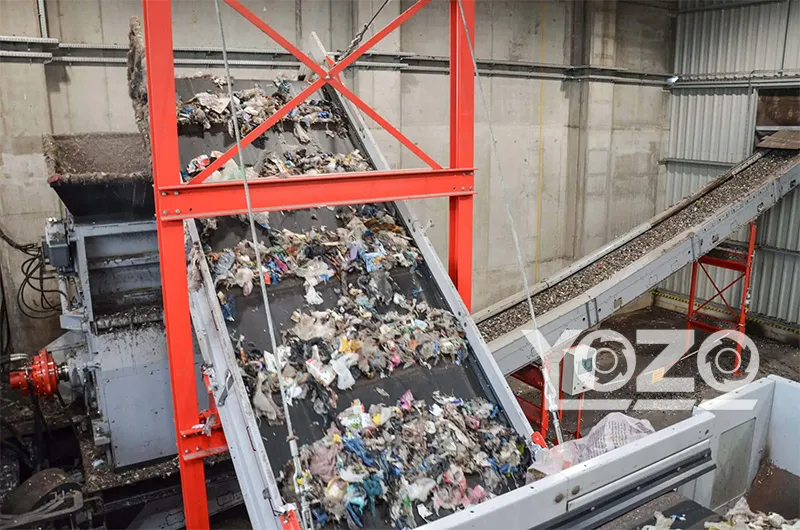
How Does a Municipal Solid Waste Shredder Improve Recycling Efficiency?
Reduce Waste Volume
Household waste is often bulky and difficult to handle. Shredding significantly reduces material volume, making transportation and storage more efficient while lowering logistics costs.
Improve Material Separation
Smaller and more consistent materials are easier to separate using magnetic separators, screening equipment, and air classification systems. This helps increase the recovery rate of recyclable materials.
Increase Sorting System Performance
Large waste items can cause blockages and reduce sorting efficiency. A shredder prepares materials for smooth movement through conveyors and automated sorting equipment.
Support RDF Fuel Production
Many recycling facilities convert non-recyclable waste into Refuse Derived Fuel (RDF). Proper shredding ensures a consistent particle size, improving RDF quality and combustion efficiency.
Reduce Landfill Dependence
By improving material recovery and recycling rates, municipal solid waste shredders help reduce the amount of waste sent to landfills.
Which Type of Shredder Is Best for MSW Recycling?
Double Shaft Shredder
Double shaft shredders are widely used in municipal waste processing because they provide:
High torque shredding power
Excellent performance with mixed waste
Stable continuous operation
Low-speed and low-noise processing
Strong resistance to material blockage
These advantages make them ideal for household garbage and mixed waste recycling applications.
Complete MSW Shredding Production Line
For larger projects, a complete production line may include:
Feeding conveyor
Double shaft shredder
Magnetic separator
Screening system
Air separator
Secondary shredder
This setup maximizes material recovery and recycling efficiency.
Benefits for Recycling Plants
Using a municipal solid waste shredder can help recycling facilities:
Increase processing capacity
Improve recyclable material recovery
Lower transportation and disposal costs
Enhance RDF fuel production
Improve overall operational efficiency
Why Choose YOZO Machinery?
As a professional manufacturer of waste recycling equipment, YOZO Machinery provides advanced shredding solutions for municipal solid waste processing plants.
YOZO Machinery offers:
Heavy-duty double shaft shredders
Customized MSW recycling systems
Wear-resistant blade technology
Reliable continuous operation
Complete waste shredding production lines
Whether your project involves household garbage, mixed commercial waste, or RDF fuel production, YOZO Machinery can provide a solution tailored to your processing requirements.
Conclusion
A municipal solid waste shredder plays a crucial role in improving household waste recycling efficiency. By reducing waste volume, enhancing material separation, and supporting RDF production, it helps recycling plants achieve higher recovery rates and lower operating costs.
For modern MSW processing facilities, investing in a reliable shredding system is an effective way to improve recycling performance and support sustainable waste management.