
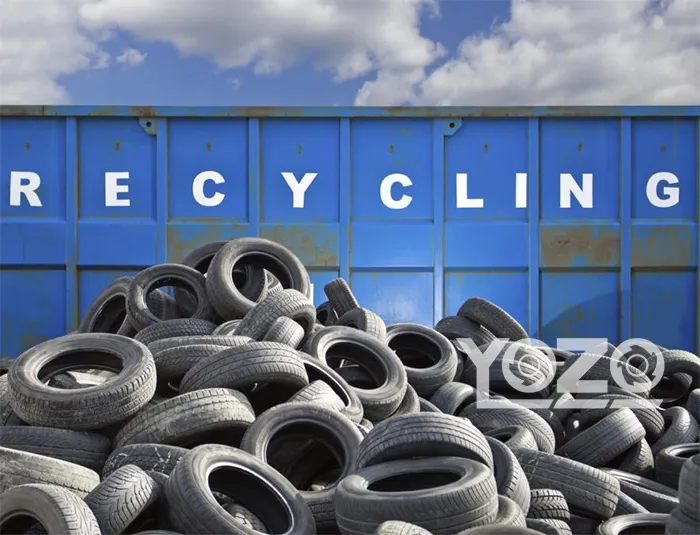
Waste tires are a major challenge for modern waste management. They are bulky, difficult to decompose, and contain a combination of rubber, steel, and textile materials. However, with the right recycling technology, used tires can be converted into valuable products instead of being sent to landfills or stored for long periods.
A modern waste tire recycling plant can process end-of-life tires into tire-derived fuel, recovered rubber, rubber granules, rubber powder, recycled steel, and other useful materials.
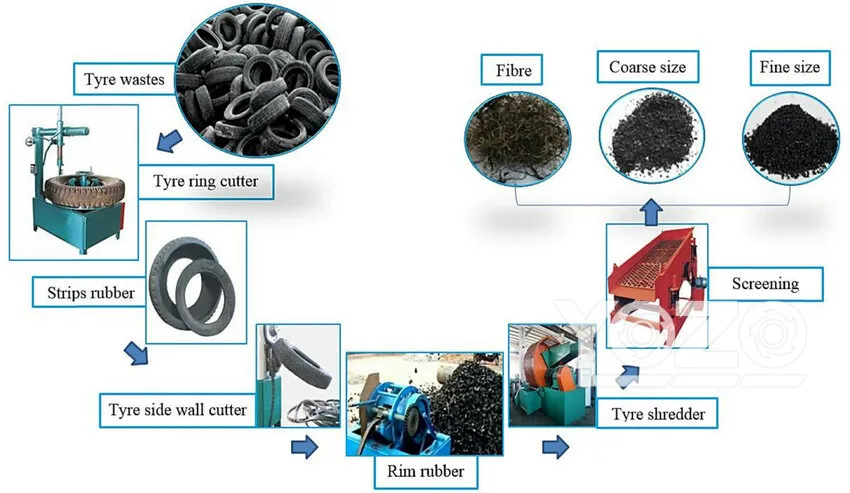
The key to successful tire recycling is a well-designed processing line that combines shredding, separation, screening, and further size reduction.
Why Should Waste Tires Be Recycled?
Waste tires are difficult to manage because of their durability and large volume. When improperly stored or discarded, they can create several environmental and operational problems.
Recycling waste tires provides important benefits:
Reduces the amount of waste sent to landfills
Decreases the storage volume of used tires
Recovers valuable rubber and steel
Reduces the demand for virgin raw materials
Supports alternative fuel production
Creates reusable materials for different industries
Instead of treating used tires as waste with no further value, recycling plants can convert them into useful secondary resources.
What Materials Can Be Recovered from Waste Tires?
A typical tire contains several material components.
Rubber
Rubber is the main material in most tires. It can be processed into tire chips, rubber granules, rubber powder, and other recycled rubber products.
Steel
Steel wires and belts are used to reinforce tires. After shredding, magnetic separation equipment can recover much of this steel for metal recycling.
Textile Fiber
Some tires contain textile reinforcement. Fiber separation equipment can remove textile materials from the rubber fraction during further processing.
The recovery of these materials allows a tire recycling plant to create several product streams from one waste material.
1. Waste Tires Can Be Converted into Tire-Derived Fuel
One of the most common uses of shredded waste tires is Tire-Derived Fuel (TDF).
Tires contain combustible rubber and other materials that can provide energy when processed and used in suitable industrial fuel systems.
A typical TDF preparation process may include:
Whole Tires → Primary Shredding → Steel Separation → Screening → Tire-Derived Fuel
The tires are first reduced into smaller pieces. Steel may then be separated, and the material can be screened according to the required size.
Tire-derived fuel may be used in suitable industrial applications, such as certain cement kilns or industrial boilers, provided that the fuel meets the requirements of the specific facility and applicable regulations.
The required tire chip size depends on the combustion system and fuel specifications.
2. Waste Tires Can Be Recycled into Rubber Granules
Another valuable product is recycled rubber granules.
Rubber granules are produced by further processing shredded tires into smaller and more uniform particles.
A typical production process may include:
Primary tire shredding
Steel separation
Secondary size reduction
Fiber separation
Granulation
Screening
Rubber granules can be used in a variety of applications, including:
Playground surfaces
Sports flooring
Rubber mats
Safety flooring
Landscaping products
Rubber tiles
Certain asphalt and road materials
The final application determines the required granule size and purity.
3. Waste Tires Can Be Processed into Rubber Powder
For applications requiring finer recycled rubber, waste tires can be converted into rubber powder.
Rubber powder production requires additional grinding and separation equipment after primary shredding.
The general process is:
Whole Tires → Tire Shredder → Steel Separation → Secondary Processing → Fiber Removal → Fine Grinding → Screening
Rubber powder can be used in selected rubber products, modified asphalt, construction materials, and other industrial applications.
The quality of the final powder depends on factors such as:
Feedstock quality
Tire composition
Particle size
Steel and fiber removal
Grinding technology
Final application requirements
Fine rubber powder production is usually more complex than producing tire chips or larger rubber granules.
4. Waste Tires Can Produce Recycled Steel
Steel recovery is another important part of waste tire recycling.
Many tires contain steel wires and belts that can be separated after shredding.
A magnetic separator is commonly used to recover ferrous metal from shredded tire material.
The recovered steel can be collected and sent to metal recycling facilities.
Steel recovery provides two main advantages:
Creates an additional saleable product
Improves the quality of the recycled rubber fraction
For a complete tire recycling plant, steel separation should be considered during the initial system design.
5. Waste Tires Can Be Used to Produce Rubber-Based Products
After further processing, recycled rubber can be used as a raw material for different products.
Potential applications include:
Rubber flooring
Anti-slip mats
Playground tiles
Sports surfaces
Protective barriers
Automotive products
Construction materials
Landscaping products
The suitability of recycled rubber depends on its particle size, cleanliness, composition, and the technical requirements of the finished product.
Not every recycled tire material is suitable for every application, so product specifications should be defined before designing the recycling line.
6. Waste Tires Can Be Used in Asphalt and Road Materials
Recycled tire rubber can also be used in certain road construction and asphalt applications.
In some systems, processed rubber is incorporated into asphalt mixtures to produce rubber-modified materials.
Potential benefits may include:
Reusing waste rubber
Reducing the demand for virgin materials
Supporting alternative material solutions
Creating additional markets for recycled tire products
The performance of rubber-modified asphalt depends on the mixture design, rubber quality, application method, and local engineering standards.
What Equipment Is Needed to Convert Waste Tires into Products?
A waste tire recycling plant may include several types of equipment, depending on the final product.
Tire Feeding Equipment
A feeding system delivers whole tires into the processing line. Conveyors, hoppers, or loading systems may be used.
Primary Tire Shredder
A heavy-duty double shaft shredder is commonly used to reduce whole tires into smaller pieces.
Its high torque and strong tearing action make it suitable for tough and bulky tires.
Magnetic Separator
This equipment removes steel from the shredded tire material.
Screening Machine
Screens separate material according to particle size and help control the quality of the final product.
Secondary Shredder or Grinder
Additional size-reduction equipment is used when smaller tire chips, rubber granules, or rubber powder are required.
Fiber Separation Equipment
Fiber removal equipment helps improve the purity of the recovered rubber fraction.
Why Is a Double Shaft Shredder Important?
The primary shredder is one of the most important machines in a tire recycling line.
Waste tires are elastic and reinforced with steel, so they require strong mechanical force for effective size reduction.
A double shaft shredder uses two counter-rotating shafts fitted with cutting tools. The shafts grab and tear the tires through high-torque operation.
Its main advantages include:
Strong tearing and shearing capability
High torque for difficult materials
Ability to process bulky whole tires
Improved material handling
Reduced tire storage volume
Stable feedstock for downstream equipment
The shredder does not usually complete the entire recycling process by itself. Instead, it prepares the tires for separation, screening, grinding, and final product production.
How to Design a Waste Tire Recycling Line?
The best processing line depends on the desired final product.
For Tire-Derived Fuel
A relatively simple system may include:
Feeding System → Primary Shredder → Magnetic Separator → Screening → Tire Chips
For Rubber Granules
A more advanced system may include:
Feeding → Primary Shredder → Steel Separation → Secondary Processing → Fiber Separation → Granulation → Screening
For Rubber Powder
A fine rubber powder line may include:
Feeding → Primary Shredder → Steel Separation → Secondary Shredding → Fiber Removal → Fine Grinding → Screening
When planning a project, the following factors should be evaluated:
Type and size of waste tires
Required processing capacity
Target output size
Final product requirements
Steel and fiber separation needs
Available space
Energy consumption
Maintenance requirements
Why Choose YOZO Machinery?
YOZO Machinery provides industrial shredding solutions for challenging waste materials, including end-of-life tires.
For a waste tire recycling plant, a YOZO double shaft shredder can be used as the primary shredding machine to process whole and bulky tires into manageable pieces.
The shredder can be integrated with conveyors, magnetic separators, screens, secondary shredders, and other processing equipment according to the required final product.
YOZO Machinery can help customers evaluate the primary shredding configuration based on tire type, capacity, output size, and downstream recycling requirements.
The goal is to create a stable and efficient feedstock for producing tire-derived fuel, rubber granules, rubber powder, and recovered steel.
Conclusion
Waste tires can be converted into valuable products through a combination of shredding, separation, screening, and further processing.
Depending on the recycling plant design, used tires can become:
Tire-derived fuel
Rubber chips
Rubber granules
Rubber powder
Recycled steel
Rubber-based products
Materials for selected asphalt and construction applications
A heavy-duty double shaft shredder is often used at the beginning of the process because it can handle large and tough tires while reducing them into a more manageable form.
With the right equipment and processing configuration, YOZO Machinery can provide a practical primary shredding solution for waste tire recycling plants and help transform end-of-life tires into useful and valuable resources.